For ages 13–17
A private space to notice how you feel
Record a moment in seconds. Everything you write stays on your phone — there is no account, no sign-in and no server.

Android today, iPhone later.
What it is like to use
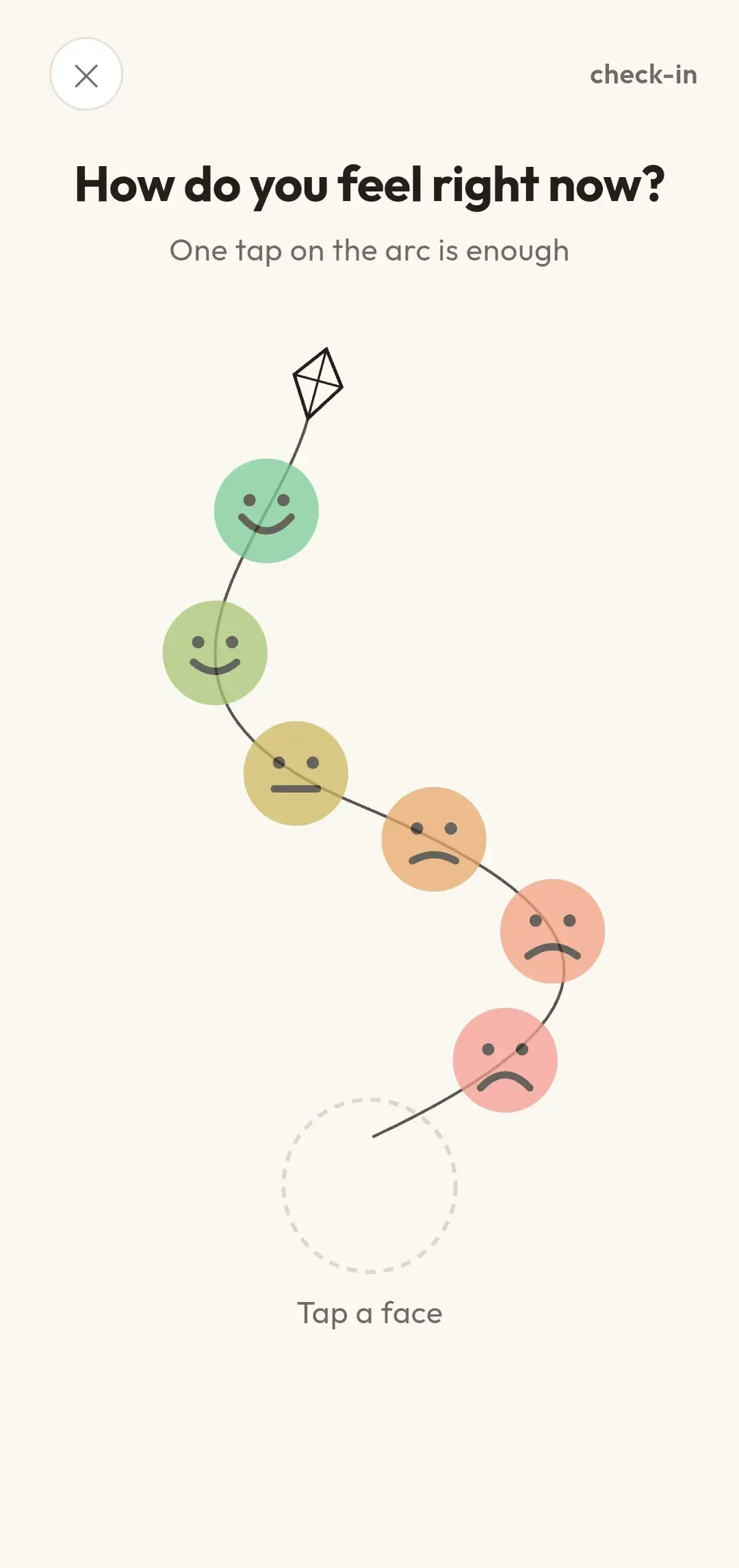
Notice a moment in seconds
Pick a mood on a six-point scale and you are done. That is a complete entry. Nothing is missing. Nothing more is needed.
Yours alone
What you write never leaves your phone. There is no server to send it to and no account to attach it to.
Counted, not graded
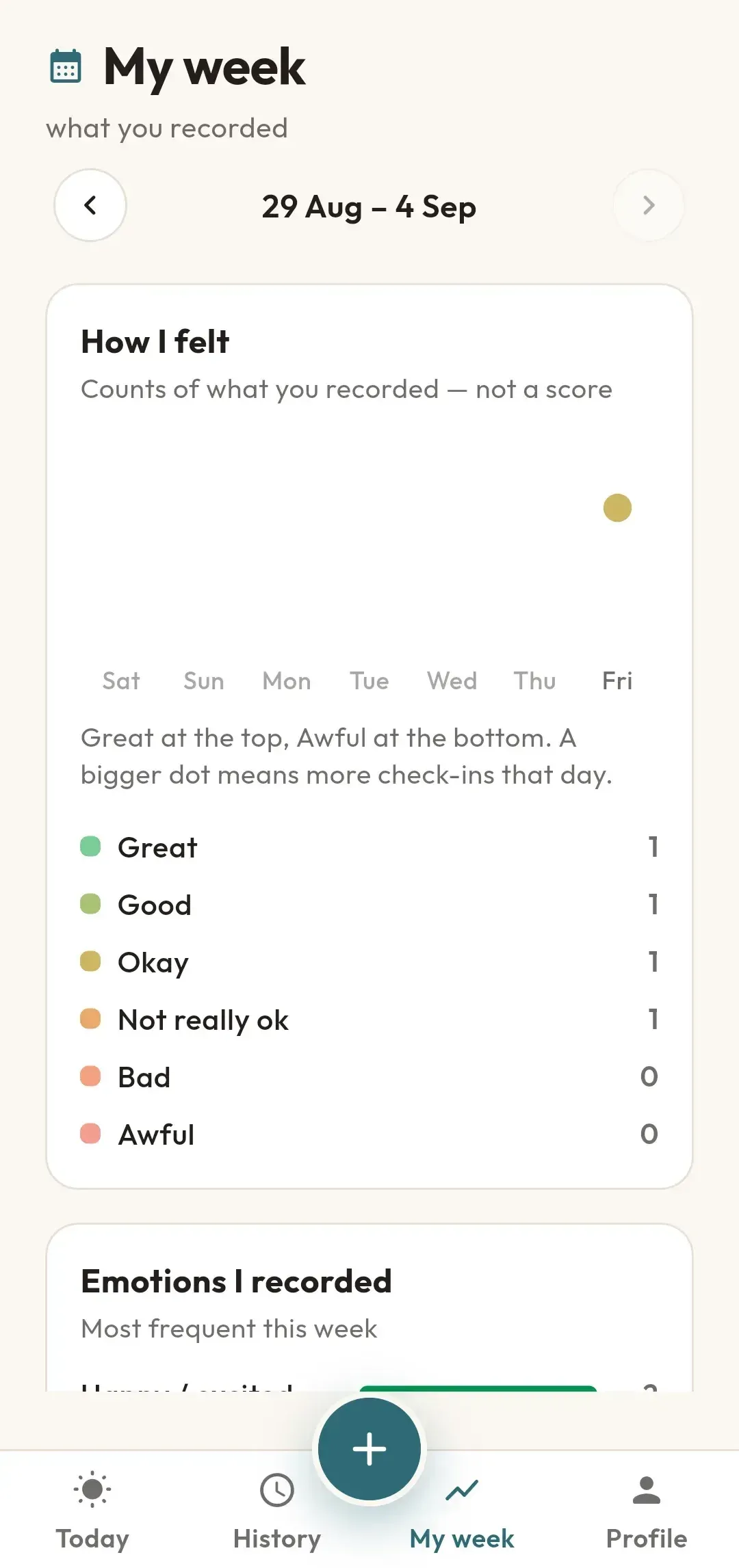
My week gathers the last seven days and shows what came up most often. Counts, not scores.
Going deeper
As much or as little as you want
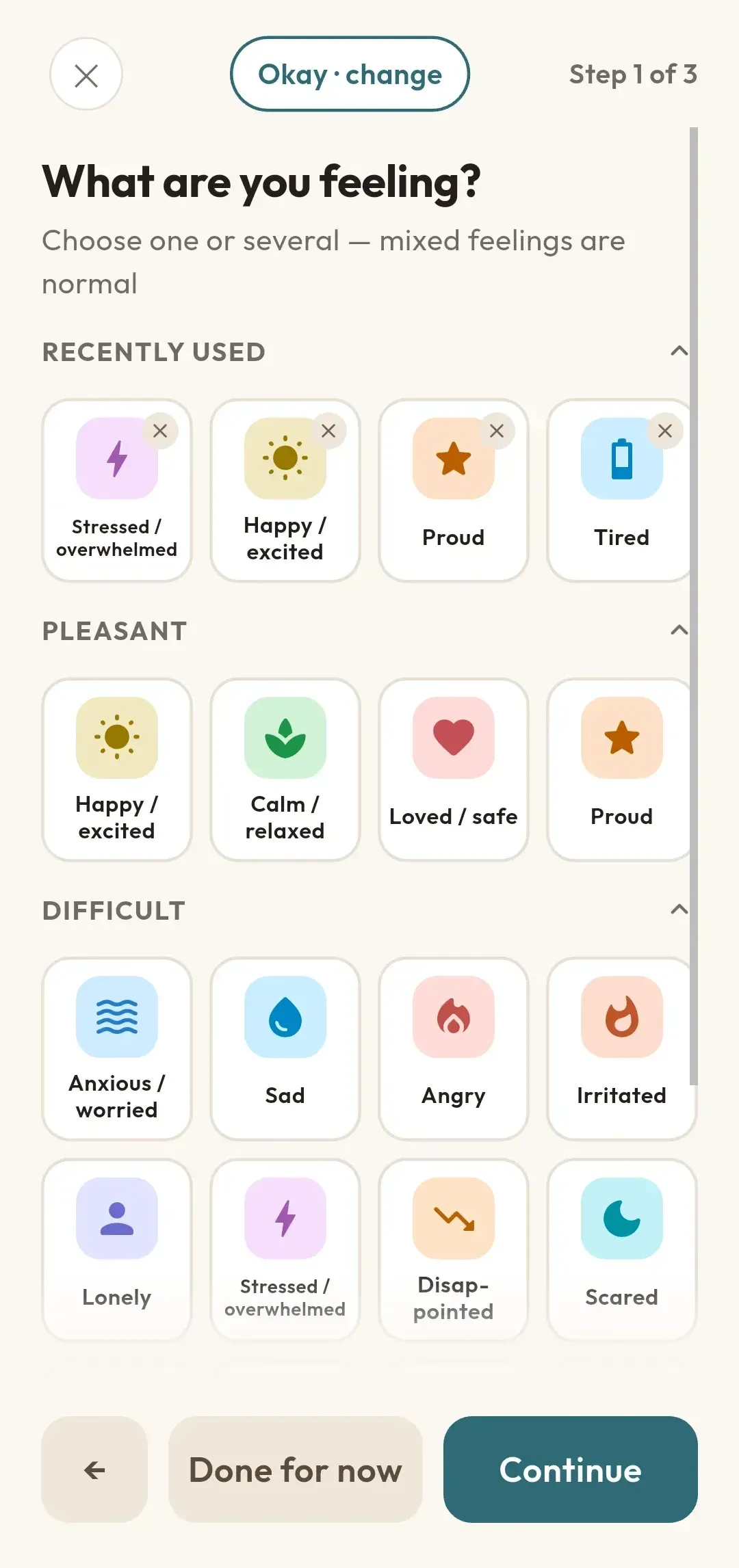
A quick check-in is worth as much as a long one. When you do want to look closer, MoodKite asks a few more things, and you can stop after any of them.
- A mood, on a six-point scale
- The specific emotions you are feeling
- What might be connected — something that happened, something on your mind, or something in your body
- What you did about it, and how you felt afterwards
- A note in your own words
What MoodKite will not do
It will not diagnose you. It will not score you or rank you. It will not tell you why you feel the way you do, and it will not suggest that one feeling is better than another.
There are no streaks to keep up and nothing to lose by missing a day. There is no leaderboard, because there is nobody to compete with.
MoodKite organises what you noticed. What it means is yours to work out.
For parents, teachers and counsellors
A record that makes a conversation concrete
A young person often knows that something is wrong before they can say which feeling it is or what was around it. MoodKite gives them somewhere to put that, one moment at a time, on ordinary days as well as hard ones.
There is no dashboard for adults and no way for anything to reach you automatically — the app has no server to send it through. If a young person wants to talk about something they recorded, they open the app and show you.
MoodKite supports that conversation; it does not replace it.
Get MoodKite
Free, no advertising, no account.
Android today, iPhone later.